Drawing the landscape
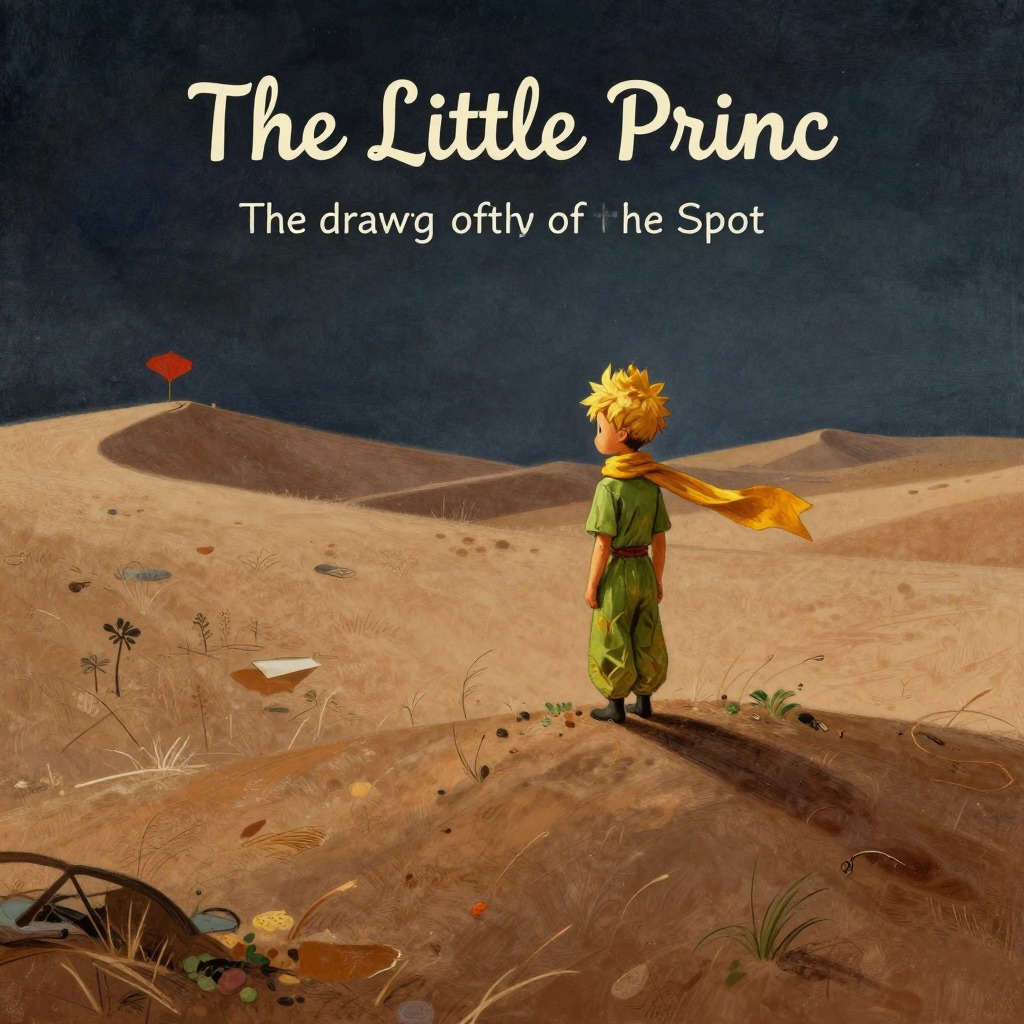
The act of drawing the landscape is the narrator's final, deliberate artistic gesture in The Little Prince—a repeated sketch of the exact spot in the African desert where the Little Prince first appeared on Earth and later disappeared. This is not a casual illustration but a memorial act, one that the narrator describes as "the loveliest and saddest landscape in the world." By drawing it again on a later page, he impresses it on the reader's memory, transforming a bare patch of sand into a charged emotional and symbolic site that holds the story's central mystery and the narrator's unresolved grief.
The Landscape as a Site of Arrival and Departure
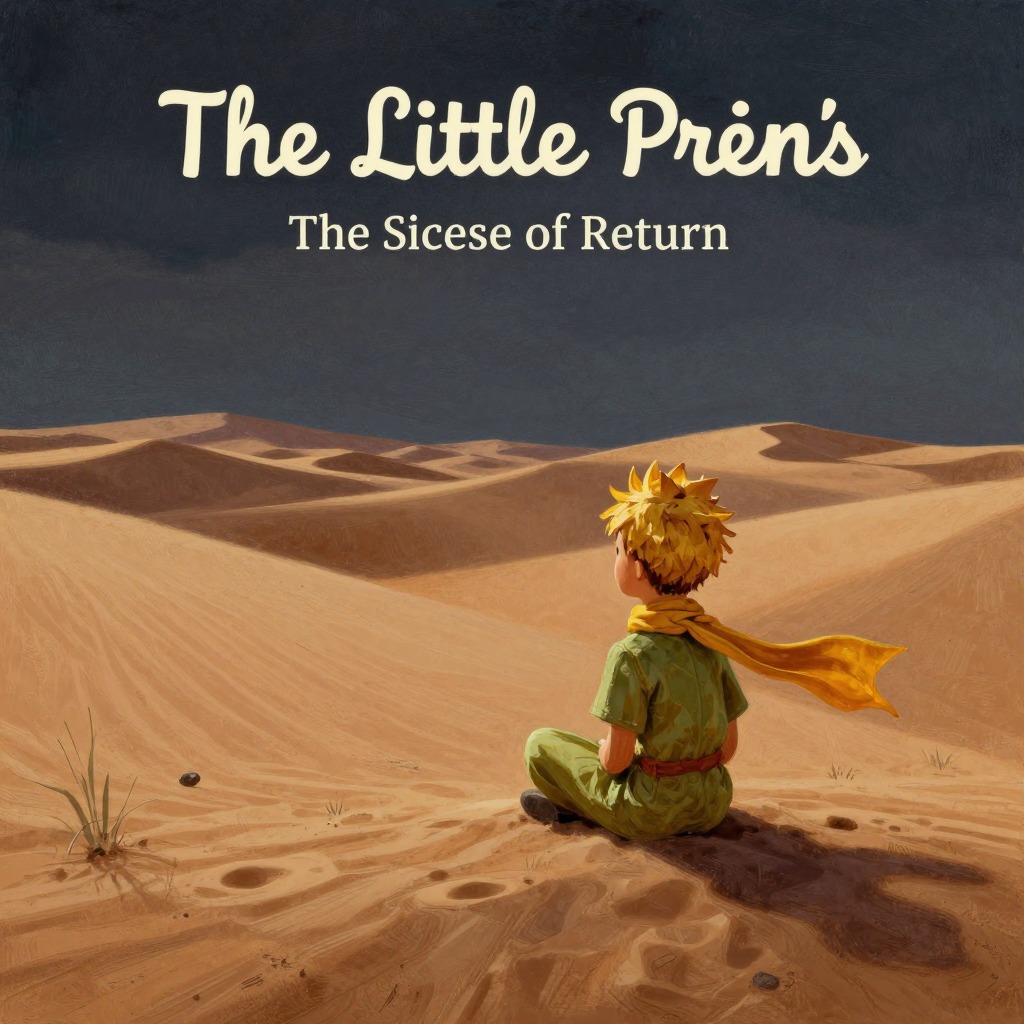
The landscape is defined by its double function: it is where the Little Prince "appeared on Earth, and disappeared." The narrator draws it twice, the second time explicitly to "impress it on your memory," suggesting that the place itself carries a significance that words alone cannot convey. The African desert, vast and empty, becomes the stage for the most important encounter of the narrator's life, and its featureless expanse mirrors the void left by the Little Prince's departure. The narrator's instruction to "look at it carefully" so that a future traveler might recognize it turns the drawing into a kind of map for a pilgrimage—a place where the boundary between the ordinary world and the extraordinary might still be crossed.
The Drawing as a Container for Uncertainty
The landscape drawing does not merely depict a location; it becomes a vessel for the narrator's obsessive, unresolved questions about what happened after the Little Prince left. The narrator's mind oscillates between two scenarios: one in which the Little Prince faithfully shuts his flower under her glass globe every night and watches over his sheep carefully, and another in which he forgets the glass globe or the sheep escapes silently in the night. This uncertainty—"Has the sheep eaten the flower?"—is the "great mystery" that the narrator embeds in the landscape. The drawing, by fixing the place of departure, also fixes the point from which all subsequent possibilities radiate. The narrator tells the reader to "look up at the sky" and ask the same question, linking the drawn landscape to the stars themselves, so that the entire universe becomes a canvas for this single, unanswerable doubt.
The Emotional Geography of the Loveliest and Saddest Landscape
The narrator's description of the landscape as "the loveliest and saddest" fuses aesthetic beauty with profound loss. The loveliness comes from the memory of the Little Prince's presence—his golden hair, his laughter, his refusal to answer questions—while the sadness arises from his absence. The drawing is an act of emotional geography: the desert is not a neutral space but one that has been saturated with the narrator's love and grief. The narrator's plea to any future traveler who might encounter the Little Prince—"please comfort me. Send me word that he has come back"—reveals that the drawing is also a form of prayer, a hope that the landscape might one day yield its secret. The repeated sketch, the careful instruction to wait "exactly under the star," and the request for a message all transform the drawing from a simple illustration into a ritual object, one that keeps the possibility of return alive even as it memorializes a departure.
The Drawing as a Bridge Between the Narrator and the Reader
The narrator's decision to draw the landscape a second time, and to address the reader directly, makes the reader a witness to the mystery. The drawing is not just for the narrator's own consolation; it is a tool for transmission. By telling the reader to "look at it carefully" and to recognize the spot if they ever travel to the African desert, the narrator invites the reader into the same state of watchful hope. The landscape becomes a shared space of memory and anticipation, a place where the boundary between the story and the reader's own world blurs. The narrator's final request—"Send me word that he has come back"—is addressed to an unknown future traveler, but it is also implicitly addressed to the reader, who has now been entrusted with the knowledge of where to look and what to wait for. The drawing, in this sense, is the narrator's last act of love: a map not of a place, but of a longing.